Showing posts with label terumah. Show all posts

Thursday, February 15, 2018

Parshas Terumah 5778

What is the Purpose of the Mishkan?

The Torah writes (Exodus 25:8):
And let them make Me a sanctuary that I may dwell among them
As a Place for the Shechina
Bechor Shor (ibid 25:2) writes:
... And G-d commanded him [Moses] to prepare that they should make a Tabernacle and the House of Holy of Holies, and in it an Ark, and in the Ark the Tablets, and there the Shechina will dwell with the Torah and the Jewish people will surround it like the Throne of Glory with the Shechina among them, like it says "that I may well among them" like among the angels...
The Ramban adds (ibid 25:1):
And the secret of the tabernacle is that the glory of God that dwelt on Mount Sinai, [also] hiddenly dwells upon it. And it is like it is written there (Exodus 24:16), "And the glory of the Lord dwells upon Mount Sinai," and it is written (Deuteronomy 5:21), "Behold, the Lord, our God, has shown us His glory and His greatness." And so [too] was it written about the tabernacle, "and the glory of the Lord, filled the tabernacle" (Exodus 40: 34)." And with the tabernacle, it twice mentioned, "and the glory of the Lord, filled the tabernacle" - corresponding to "His glory and His greatness." And the glory that was shown to them on Mount Sinai was always with Israel in the tabernacle.
As a Palace like an flesh-and-blood king
Shadal (ibid 25:1) writes:
After they accepted all of the judgements and the Torahs and G-d became a King in Jeshurun, it is fitting that they should make a Temple to Him, like Kings so He can dwell among them and this will strenthen the unity of the nation and its intense attachment to the Torah ...
To Atone for the Golden Calf
Sifrei Devarim (1) writes:
Rabbi Benaya says: when the Jews served an idol they deserved destruction, comes the gold of the Tabernacle and atones for the gold of the [Golden] Calf
Showing Forgiveness for the Golden Calf
Rabbeinu Bachya (25:6) writes:
In order to show that the sin had been completely forgiven, the Torah commences the list of contributions to be donated for building the Tabernacle with gold. This means that the very means which had caused their disgrace would now become the means by which G’d would express His goodwill. A Biblical verse expressing the same sentiment is found in Hoseah 7,3, ברעתם ישמחו מלך, ”with their very malice they make a king merry.”
As a Place to Connect with G-d after the Golden Calf
The Sforno writes (Exodus 31:18):
after the Torah described all the spiritual accomplishments which should have resulted from the many days Moses had spent on the mountain with G’d, the Torah now has to explain why all these spiritual accomplishments G’d had envisaged did not in fact materialise so that it became necessary to build a Tabernacle, etc., in order to achieve these spiritual accomplishments via a different route. The Torah explains that the cause of this detour in the spiritual ascent of the people was the abuse they had made of the freedom of choice. They, who had been about to receive the set of Tablets made and written by G’d Himself at the end of Moses’ stay on Mount Sinai for forty days, who were all to personify the ideal of being priests, and a holy nation, rebelled, corrupted themselves, as testified in Exodus 33,6 when they divested themselves of the signs of the covenant G’d had made with them, removing the garments emblazoned with the blood of that covenant.
(see also another explanation in the name of Rabbi Y. B. Soloveitchik as related to Adam)
As a Way to Adopt from Idolatry
The Rambam writes (Moreh 3:32):
... It is, namely, impossible to go suddenly from one extreme to the other: ... Now God sent Moses to make [the Israelites] a kingdom of priests and a holy nation (Exod. 19:6) by means of the knowledge of God ... But the custom which was in those days general among all men, and the general mode of worship in which the Israelites were brought up, consisted in sacrificing animals in those temples which contained certain images, to bow down to those images, and to burn incense before them; religious and ascetic persons were in those days the persons that were devoted to the service in the temples erected to the stars, as has been explained by us. It was in accordance with the wisdom and plan of God, as displayed in the whole Creation, that He did not command us to give up and to discontinue all these manners of service; for to obey such a commandment it would have been contrary to the nature of man, who generally cleaves to that to which he is used; it would in those days have made the same impression as a prophet would make at present if he called us to the service of God and told us in His name, that we should not pray to Him, not fast, not seek His help in time of trouble; that we should serve Him in thought, and not by any action. For this reason God allowed these kinds of service to continue; He transferred to His service that which had formerly served as a worship of created beings, and of things imaginary and unreal, and commanded us to serve Him in the same manner; ... He made it obligatory that certain gifts, called the gifts of the Levites and the priests, should be assigned to them for their maintenance while they are engaged in the service of the temple and its sacrifices. By this Divine plan it was effected that the traces of idolatry were blotted out, and the truly great principle of our faith, the Existence and Unity of God, was firmly established; this result was thus obtained without deterring or confusing the minds of the people by the abolition of the service to which they were accustomed and which alone was familiar to them. ...
The Ramban argues (Vayikra 1:9):
Since the deeds of people are determined by thought, speech and action, God, may He be blessed, commanded that when he sins, he brings a sacrifice and place his hands upon him corresponding to the deed, and confess with his mouth corresponding to the speech, and burn the innards and the kidneys, as they are the instruments of thought and desire. And the limbs [of the sacrifice] correspond to the hands and feet of a person that does all of his work. And he sprinkles the blood on the altar corresponding to the blood of his soul, so that a person think in doing all of this that he sinned to God with his body and his soul, and it is fit for him that his blood be spilled and his body burnt; were it not for the kindness of the Creator, who took an exchange and ransom from him [in] the sacrifice - that its blood be instead of his blood and its soul be instead of his soul. And the central limbs correspond to his central limbs. And the portions with which to sustain the teachers of Torah [are so] that they will pray for him. And the daily sacrifice is because there is no saving the community from always sinning. And these words are tenable [and] grab the heart, like the words of classic homiletic teachings (Shabbat 87a). And in the way of truth (mysticism), the sacrifices contain a hidden secret...
[A list of sources for this article were partially based on this article at AlHatorah.org - see further for a fuller explanation of sources and their differences]

Wednesday, March 1, 2017

Parshas Terumah 5777

The Special Gifts

The Torah writes (Exodus 25:3):

And these are the gifts that you shall accept from them: gold, silver, and copper;
Bechor Shor (ibid) explains the difference between gifts collected here and everywhere else:
They only brought things that were usable for construction itself, and not like all other gifts that people can gift anything to the Altar or the upkeep of the House and those gifts are then sold and the money is kept for the upkeep of the House or the Altar. But here they did not gift things that could be sold and money taken from it, but only things needed for the Tabernacle like metals, animals, and clothes that were given directly for the work itself as it says described the specific 13 things appropriate for construction
HaEmek Davar (ibid) explains similarly:
The command from G-d was not according to the wealth of each individual in money, even though "money answers everything" to buy the things they needed, only it was according to what each person possessed from these things and one who didn't have any of these things, even though he was rich, was exempt

The Purpose of Silver

Rashi (ibid) writes:
All these came (were brought) as voluntary gifts, each man giving as his heart prompted him, except that silver which was brought by all in equal quantities (cf. Rashi above), a half shekel by each person. For we do not find in the account of the entire work connected with the Tabernacle that any silver was needed for the work there described in detail over and above this, for it is said, (Exodus 38:25-26) “And the silver of them who were numbered of the congregation [was an hundred talents, etc.] … a beka for every man etc.” and vv. 27 and 28 inform us that of this silver were made the Sockets and the hooks. Of the other silver which came (was brought) there, as a free-will gift they made the holy vessels (lit., vessels for service), and it is this silver that is referred to in this verse and which is stated in the preceding verse as having been brought voluntarily.
Ibn Ezra disagrees:
And to me it is not necessary to sat that for the Torah can exclude one item from a list of 16 for 15 of them were voluntary. And we find similarly by the sonds of Jacob that were born in Padan Aram and Benjamin was born in Israel; and the 70 souls that descended to Egypt

Wool, Not Silk

The Torah writes (Exodus 25:4):
blue, purple, and crimson yarns, fine linen, goats’ hair;
Kil Yakar writes (ibid):
The blue, purple and crimson yarns are all the same type of wool

Rabbeinu Bachya (ibid) writes:
And we don't find silk among the gifts to the Tabernacle, for it comes from the body of an unclean creature which is a worm, and is not fit to be used for the work of Heaven ... and regarding the crimson yarn, it does not come from the body of the bug but from the nest in which the worm lives in

Wednesday, February 10, 2016

Parshas Terumah 5776

What is Acacia Wood?

The Torah writes (Exodus 25:1-5):
And the LORD spoke unto Moses, saying: ’Speak unto the children of Israel, that they take for Me an offering; ... and acacia-wood
The Talmud (Rosh Hashanah 23a) explains that this was one of the ten types of cedar trees:
There are 10 types of cedars as it says "I will plant in the wilderness the cedar, the acacia-tree, And the myrtle, and the oil-tree; I will set in the desert the cypress, the plane-tree, and the larch together" (Isaiah 41:19)
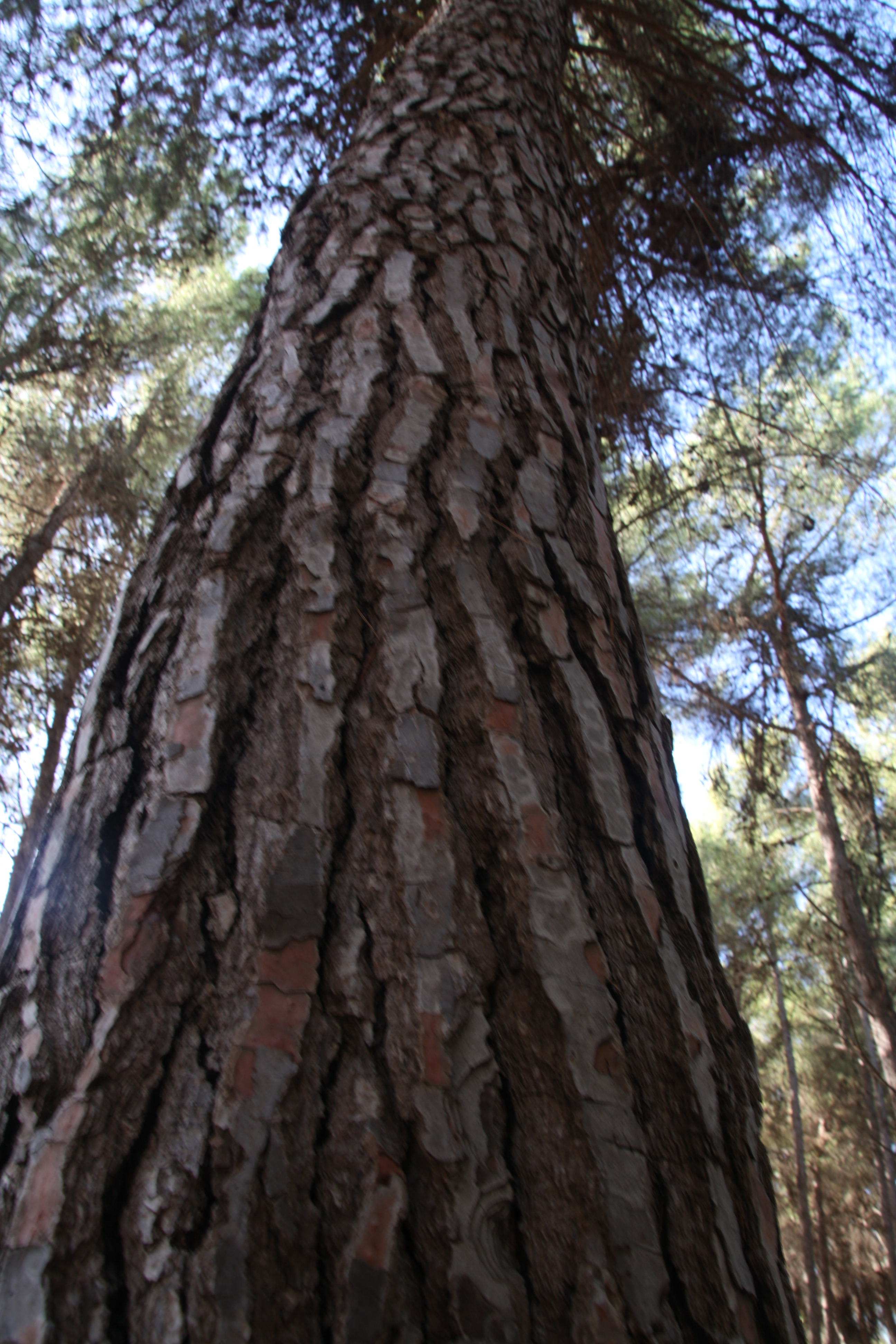
Lazei Rashi (ibid) explains that Rashi here refers to the pine tree

Rabbi Aryeh Kaplan in the Living Torah (Exodus ibid) explains that this is referring to a different tree named Acacia albida (applering acacia) which can grow in deserts.

Rabbi Aryeh Kaplan (ibid) also cites opinions that this refers to decay-proof wood

Abarbanel (ibid) explains that this was a type of cedar which was extremely light


Acacia Albida (By Avi1111, CC BY-SA 3.0)
Pine tree in Israel (אורן דהן - CC BY 2.5)
Cedars of Lebanon (BlingBling10, CC BY-SA 3.0)

Where did they get the Acacia Wood?

Rashi explains where they brought them from Egypt (Exodus ibid):
Where did they get these [trees] in the desert? Rabbi Tanchuma explained that our father Jacob foresaw with the holy spirit that the Israelites were destined to build a Mishkan in the desert, so he brought cedars to Egypt and planted them. He commanded his sons to take them with them when they left Egypt. — [from Mid. Tanchuma 9]
Rokeach al haTorah (ibid 26:15) explains:
For Abraham planted them as an orchard in Beer Sheba
Daas Zeikim (ibid) cites opinions that these may have been grown from Jacob's staff:

We have been told in addition that the בריח התיכון, (Exodus 36:33), the center bolt, used to be Yaakov’s walking staff, the one with which he had crossed the river Jordan on his way to Lavan.  ... Another interpretation found in the Midrash is that this was wood from the staff Yaakov had taken with him on the way to Lavan. [I suppose that what the Midrash means is that Yaakov had planted that walking staff in the earth in Charan already, and it had developed. Ed.]

Daas Zeikim (ibid) cites another opinion that they got them from the desert:
There were some forests in the desert from which the Israelites were able to cut boards which they called shittim. This is also why we read in Joshua 2:1 that “Joshua sent out spies from (the forest around Shittim)” This is also what the prophet Isaiah referred to (Isaiah 41:19) when he wrote "I will plant cedars in the deserts, acacias and myrtles, and oleasters"
(Matnas Kehuna [Exodus Rabba 20:3] explains that Shittim was called that way because of its large forests of acacia wood)

Ibn Ezra (ibid) explains in a similar fashion:
One wonders why they would carry them out [of Egypt] if they did not need them, and furthermore the Egyptians thought they went to sacrifice and would come back, and they would ask them why they are taking such large beams as high as 20 cubits ... Therefore, a different explanation - close to Mt. Sinai there was a forest of acacia wood and when they came there, he [Moses] told them that they will stay there for a long time and will not have the Clouds [of Glory] as I explained earlier. At that time they all made shelters and the Princes made courtyards for themselves and cut down the entire forest for they were numerous people and made shelters. But Moses did not tell them about the Tabernacle until after Yom Kippur and that is what it means "all that they had before" [i.e. they already had them in their possession]

Midrash Shir haShirim Rabbah (4:13) explains that trees grew from the Well of Miriam:
Rabbi Yochanan said: the well grew for them all kinds of legumes, seeds and trees and we know this for when Miriam died and the well stopped, they said: "This is not a place for seeds, or fig trees" (Numbers 20:5)
(see also Josh Waxman's parshablog)

Abarbanel (ibid) provides another explanation - they bought them on the way:
And a better explanation is that nations came from all over to the camp of the Jews to sell them all kinds of things, and from them they bought oil for lighting [the Menorah], and the spices and oil for anointing and incense, for you would not think that they brought all that from Egypt, and from them they also bought the acacia wood

[Published at parshapeople.blogspot.com / Comments welcome to parsha-people@publishyoursefer.com]