Wednesday, February 24, 2016

Parshas Ki Sisa (5776)

How Many Arks Existed?

The Torah writes (Exodus 34:1):
And the LORD said unto Moses: ‘Hew thee two tables of stone like unto the first; and I will write upon the tables the words that were on the first tables, which thou didst break.
Later on (Deuteronomy 10:1):
At that time the LORD said unto me: ‘Hew thee two tables of stone like unto the first, and come up unto Me into the mount; and make thee an ark of wood.
Rashi explains (ibid):
And this was not the Ark that Bezalel made for they did not occupy themselves with the Tabernacle until after Yom Kippur, for when he [Moses] descended from the mountain [a second time], he commanded them about the work of the Tabernacle. And Bezalel made the Tabernacle first, and then the Ark and the other implements, and therefore this was a different Ark for it went out to war with them. And the one that Bezalel did not go out to war except in the days of Eli.
Rashi's source is the Jerusalem Talmud (Shekalim 6:1):
Rabbi Yehuda ben Lakish learned: There were two Arks that went with the Jewish people in the desert. One had the Torah that was given inside it, and the other had the remains of the [first] Tablets in it. The one that had the Torah, stayed inside the Tabernable ... the other one with the remains of the Tablets went in and out with them.
The Talmud (ibid) cites another opinion:
And the Rabbis said: there was one Ark, and one time they took it out during the days of Eli and it was captured
The Abarbanel (Samuel I 4) explains an intermediate opinion, when only one Ark existed to hold both the first and second Tablets, but there was a second Ark that went to war which contained the Ephod and the Urim veTumim that the Priest wore during war

Midrash Mekhilta (13:19) states another opinion about two arks in the desert:
the casket of Joseph went alongside the ark of "the Life of the Worlds" (i.e., the Ten Commandments), and when the passersby asked: What are these two arks? they were told: This is the ark of a dead man and the other is the ark of "the Life of the Worlds." And when they asked: How is it that the ark of a dead man goes alongside the ark of "the Life of the Worlds"? they were told: He who lies in this ark fulfils what is written in what lies in the other ark.
Additional:
[Published at parshapeople.blogspot.com / Comments welcome to parsha-people@publishyoursefer.com]

Wednesday, February 17, 2016

Parshas Tetzaveh 5776

Were Aaron's Grandchildren Priests?

The Torah writes (Exodus 28:1):
And bring thou near unto thee Aaron thy brother, and his sons with him, from among the children of Israel, that they may minister unto Me in the priest’s office, even Aaron, Nadab and Abihu, Eleazar and Ithamar, Aaron’s sons.
The Ramban explains (ibid, see also Rashi [Numbers 25:13]) that Aaron's grandchildren already born were excluded:
For only these five were made into priests ... and it comes to exclude Phineas (son of Eleazar) and other children for only these four were included with him (i.e. Aaron), and any born after this time
However, Ibn Ezra (Numbers 25:12) disagrees on the definition of what  Phineas got:
And Zimri's brothers would not disturb him ... and his reward (Phineas for killing Zimri) was that him and his descendents be given the covenant of priesthood forever, for Kohanim Gedolim were from Phineas even though Eleazar had other sons
The Ralbag (beginning of Pinchas) cites this opinion and another one:
This is to say that priesthood will not cease from him and his descendents forever, and this is a blessing for his lineage to say pure always for without it its not a blessing for all those who came from Aaron are considered priests ... and it is possible this is a hint for the Kehunah Gedolah and it would make more sense and it is a promise that he would not die before his father
The source of these disagreements is the Talmud (Zevachim 101b) which cites two different opinions regarding Aaron's grandchildren. According on one opinion, all of Aaron's descendents were priests originally (this is Ralbag's opinion), according to the second opinion only Phineas became a priest and after he killed Zimri (this is Rashi's opinion)

Were Moses's Children Priests?

The Talmud (Zevachim 101b) cites an opinion regarding Moses:
Rab said: Moses our teacher was a Kohen Gadol and ate from the sacrifices
However, we do not find that his children were considered priests. Instead, they were considered regular Levites as we find regarding Moses's grandson (Judges 17:7):
And there was a young man out of Beth-lehem in Judah—in the family of Judah—who was a Levite, and he sojourned there.
(see here for further explanation how we know who he was)

We find similarly (Joshua 21:5):
And the rest of the children of Kohath had by lot out of the families of the tribe of Ephraim, and out of the tribe of Dan, and out of the half-tribe of Manasseh, ten cities.
As Rashi explains [Joshua 21:5]):
These were the sons of Moses, Yitzhar, Hevron and Uziel
(this would also explain the presence of Moses's grandson near Dan)

It seems the priesthood had to be explicitly assigned to children as per the verse here (Exodus 28:1):
And bring thou near unto thee Aaron thy brother, and his sons with him

[Published at parshapeople.blogspot.com / Comments welcome to parsha-people@publishyoursefer.com]

Wednesday, February 10, 2016

Parshas Terumah 5776

What is Acacia Wood?

The Torah writes (Exodus 25:1-5):
And the LORD spoke unto Moses, saying: ’Speak unto the children of Israel, that they take for Me an offering; ... and acacia-wood
The Talmud (Rosh Hashanah 23a) explains that this was one of the ten types of cedar trees:
There are 10 types of cedars as it says "I will plant in the wilderness the cedar, the acacia-tree, And the myrtle, and the oil-tree; I will set in the desert the cypress, the plane-tree, and the larch together" (Isaiah 41:19)
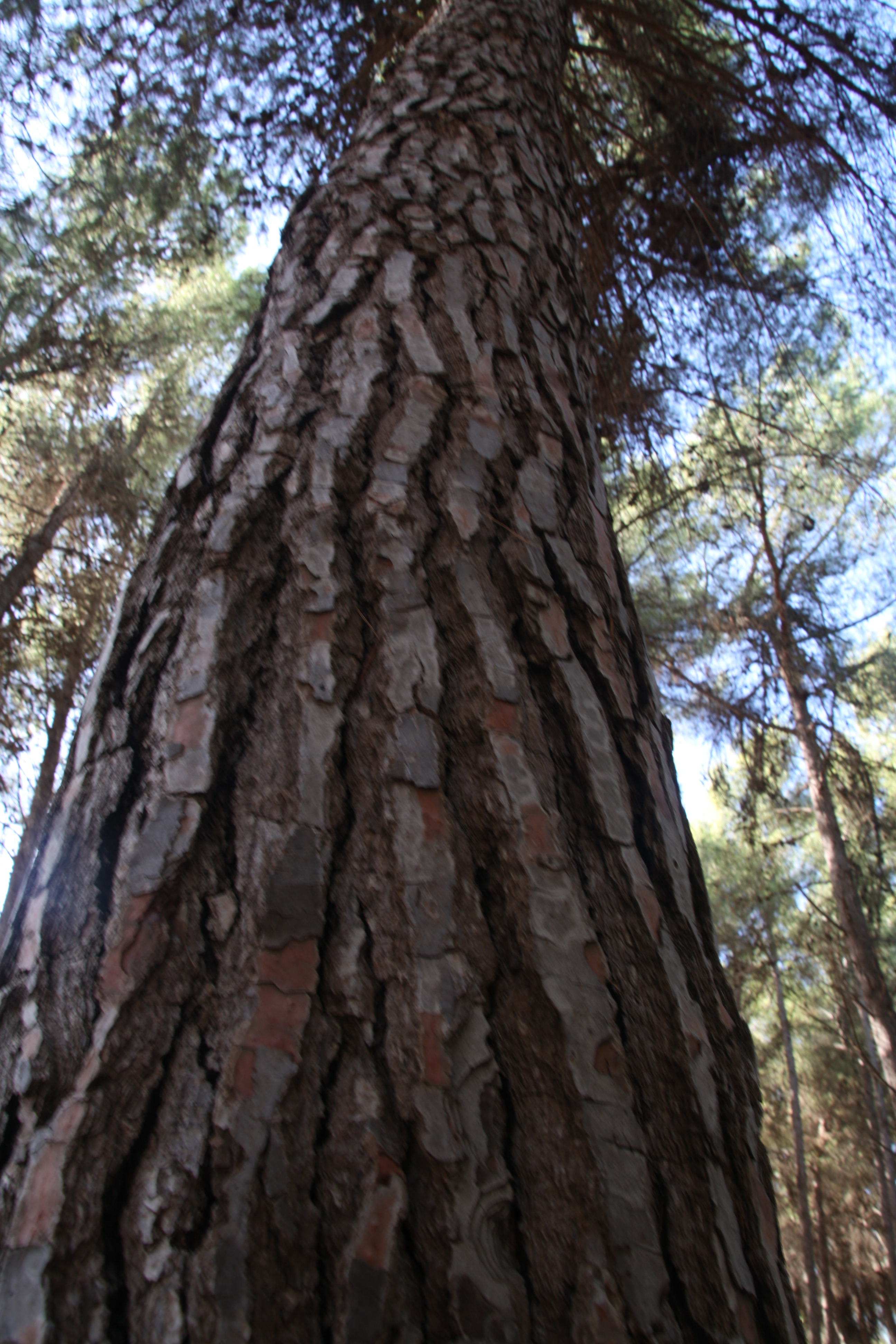
Lazei Rashi (ibid) explains that Rashi here refers to the pine tree

Rabbi Aryeh Kaplan in the Living Torah (Exodus ibid) explains that this is referring to a different tree named Acacia albida (applering acacia) which can grow in deserts.

Rabbi Aryeh Kaplan (ibid) also cites opinions that this refers to decay-proof wood

Abarbanel (ibid) explains that this was a type of cedar which was extremely light


Acacia Albida (By Avi1111, CC BY-SA 3.0)
Pine tree in Israel (אורן דהן - CC BY 2.5)
Cedars of Lebanon (BlingBling10, CC BY-SA 3.0)

Where did they get the Acacia Wood?

Rashi explains where they brought them from Egypt (Exodus ibid):
Where did they get these [trees] in the desert? Rabbi Tanchuma explained that our father Jacob foresaw with the holy spirit that the Israelites were destined to build a Mishkan in the desert, so he brought cedars to Egypt and planted them. He commanded his sons to take them with them when they left Egypt. — [from Mid. Tanchuma 9]
Rokeach al haTorah (ibid 26:15) explains:
For Abraham planted them as an orchard in Beer Sheba
Daas Zeikim (ibid) cites opinions that these may have been grown from Jacob's staff:

We have been told in addition that the בריח התיכון, (Exodus 36:33), the center bolt, used to be Yaakov’s walking staff, the one with which he had crossed the river Jordan on his way to Lavan.  ... Another interpretation found in the Midrash is that this was wood from the staff Yaakov had taken with him on the way to Lavan. [I suppose that what the Midrash means is that Yaakov had planted that walking staff in the earth in Charan already, and it had developed. Ed.]

Daas Zeikim (ibid) cites another opinion that they got them from the desert:
There were some forests in the desert from which the Israelites were able to cut boards which they called shittim. This is also why we read in Joshua 2:1 that “Joshua sent out spies from (the forest around Shittim)” This is also what the prophet Isaiah referred to (Isaiah 41:19) when he wrote "I will plant cedars in the deserts, acacias and myrtles, and oleasters"
(Matnas Kehuna [Exodus Rabba 20:3] explains that Shittim was called that way because of its large forests of acacia wood)

Ibn Ezra (ibid) explains in a similar fashion:
One wonders why they would carry them out [of Egypt] if they did not need them, and furthermore the Egyptians thought they went to sacrifice and would come back, and they would ask them why they are taking such large beams as high as 20 cubits ... Therefore, a different explanation - close to Mt. Sinai there was a forest of acacia wood and when they came there, he [Moses] told them that they will stay there for a long time and will not have the Clouds [of Glory] as I explained earlier. At that time they all made shelters and the Princes made courtyards for themselves and cut down the entire forest for they were numerous people and made shelters. But Moses did not tell them about the Tabernacle until after Yom Kippur and that is what it means "all that they had before" [i.e. they already had them in their possession]

Midrash Shir haShirim Rabbah (4:13) explains that trees grew from the Well of Miriam:
Rabbi Yochanan said: the well grew for them all kinds of legumes, seeds and trees and we know this for when Miriam died and the well stopped, they said: "This is not a place for seeds, or fig trees" (Numbers 20:5)
(see also Josh Waxman's parshablog)

Abarbanel (ibid) provides another explanation - they bought them on the way:
And a better explanation is that nations came from all over to the camp of the Jews to sell them all kinds of things, and from them they bought oil for lighting [the Menorah], and the spices and oil for anointing and incense, for you would not think that they brought all that from Egypt, and from them they also bought the acacia wood

[Published at parshapeople.blogspot.com / Comments welcome to parsha-people@publishyoursefer.com]

Wednesday, February 3, 2016

Parshas Mishpatim 5776

Who Were the Philistines?

The Torah writes (Exodus 23:31):

And I will set thy border from the Red Sea even unto the sea of the Philistines, and from the wilderness unto the River; for I will deliver the inhabitants of the land into your hand; and thou shalt drive them out before thee.
They are first mentioned as descendents of Ham (Genesis 10:13-14):
And Mizraim begot Ludim, and Anamim, and Lehabim, and Naphtuhim, and Pathrusim, and Casluhim—whence went forth the Philistines—and Caphtorim.
There are two main types of Philistines mentioned in Tanach:
  • The first kind were mentioned during the times of Abraham, Isaac and Jacob. They were in the area called Gerar, ruled by a king (Abimelech), and had an army headed by a general (Phicol) [see Genesis 21:32]
  • The second kind starts from the times of Joshua (see Joshua 13:2-3). They lived in five cities of Gaza, Ashdod, Ashkelon, Gath and Ekron, and were ruled by five commissioners or lords. They are found all the way until the times of Jeremiah (see Jeremiah 25:20).
The Ramban explains (Genesis 10:13) that the Caphtorim and Cashluhim conquered the land of the Philistines but it continued to be called that way. That would mean that the Philistines at the times of Joshua and later were Caphtorim as explained in the Torah (Deuteronomy 2:23):
and the Avvim, that dwelt in villages as far as Gaza, the Caphtorim, that came forth out of Caphtor, destroyed them, and dwelt in their stead
(Caphtor is an island [see Jeremiah 47:4], and is identified by many as the island of Crete)

(see also the Daat Mikra atlas [p. 72 and p. 184] that explains that there were three kinds of Philistines, with an intermediate type conquering the first kind at the time of Moses, and the ones from Caphtor arriving during the period of Judges)
This would also explain how Abimelech's grandchildren ended up in Jerusalem, as it is written (Joshua 15:63):
And as for the Jebusites, the inhabitants of Jerusalem, the children of Judah could not drive them out; but the Jebusites dwelt with the children of Judah at Jerusalem, unto this day.
Rashi (ibid) explains:
The Sifri writes: Rabbi Yehoshua ben Karcha said - they were able to but were not permitted because of the oath that Abraham swored to Abimelech, and the Jeusubites were called that way because of the tower of David which is in Jerusalem and its name is Jesub. For the residents of that district were Philistines and when Judah conquered Jerusalem, they did not conquer that district
(see also Rashi [II Samuel 5:6] where these Philistines were specifically mentioned as being descendents of Abimelech)

[Published at parshapeople.blogspot.com / Comments welcome to parsha-people@publishyoursefer.com]

Wednesday, January 27, 2016

Parshas Yisro 5776

What Was Yisro's Job?

The Torah writes (Exodus 18:1):
Now Jethro, the priest of Midian, Moses’ father-in-law, heard of all that God had done for Moses, and for Israel His people, how that the LORD had brought Israel out of Egypt.

The Mekhilta (ibid) explains two opinions as to his title:
R. Yehoshua says: He was a priest, as in (Judges 18:30) "And Jonathan the son of Gershom the son of Menasheh — he and his sons — were Cohanim (for idolatry) to the tribe of Dan until the day the land was exiled." R. Elazar Hamodai says: He (Yithro) was an officer, as in (II Samuel 8:18) "And the sons of David were Cohanim."
Ikar Sifsei Chachamim (Genesis 47:22) explains further:
Any time it says "priest" without explaining for whom, it means a priest for divinity, and even more so if it says "priest for G-d", or "priest for idols" or stars. But priest of Midian or priest of On, when it mentions the name of a country or a city it means an officer or a prince of that place, and thus Onkelos explains it "priest of On", and "priest of Midian" as an officer of On and officer of Midian.

The Grandson of Moses

The Torah writes (Exodus 18:3):
and her two sons; of whom the name of the one was Gershom; for he said: ‘I have been a stranger in a strange land’;
Later on (Judges 18:30), we find the following regarding the idol of Michah:
And the children of Dan set up for themselves the graven image; and Jonathan, the son of Gershom, the son of Manasseh, he and his sons were priests to the tribe of the Danites until the day of the captivity of the land.
Rashi (ibid) explains based on the Talmud (Bava Bathra 109b):
the son of Menasseh: Out of respect for Moses (משֶׁה) a “nun” was inserted thereby changing the name (מְנַשֶּׁה). This letter was written suspended to indicate that it was not Menasseh but actually Moses.
Baal HaTurim (Exodus 2:16) explains why it happened:
"And to the priest of Midian" - similar language appears later on (Judges 17:10 18:19) regarding the idol of Micah. Jethro was a priest for idols and when Moses married his daughter, he required him to set aside his first born son as a priest for idols. Moses knew that his father-in-law will repent when he converts, nevertheless Moses was punished by having his grandson become a priest for idols as it says "Jonathan son of Gershom son of Menashe", and our Rabbis learn (Bava Bathra 109b) "son of Moses".
Targum Pseudo-Jonathan (Exodus 4:25) writes a similar story regarding Gershom's circumcision:
And Ziporah took a knife and circumcised Gershom, her son, and threw the foreskin to the feet of the destroying angel, and said: "My groom wanted to circumcise him but his father-in-law stopped him, and this circumcision should atone for my groom
The Talmud (Bava Bathra 110a) writes that he eventually repented:
When King David saw that money was precious to him, he put him in charge of the treasuries for it says (Chronicles I 26:24): "Shebuel the son of Gershom, the son of Moses, was ruler over the treasuries." But was Shebuel his name? Wasn't Jonathan his name? Rabbi Jochanan says: for he returned to G-d with his full heart [and his name was changed)
(see further discussion by Josh Waxman in his parshablog)

Additional Topics:


(see also our earlier post about who the elders in this week's parsha were)

[Published at parshapeople.blogspot.com / Comments welcome to parsha-people@publishyoursefer.com]

Wednesday, January 20, 2016

Parshas Beshalach 5776

What is "the way of the Philistines"?

The Torah writes (Exodus 13:17):
And it came to pass, when Pharaoh had let the people go, that God led them not by the way of the land of the Philistines, although that was near; for God said: 'Lest the people regret when they see war, and they return to Egypt.’

The Daat Mikra atlas (p. 72, p. 105) explains that there were two major trade routes in Canaan:
  • The way of the Philistines (or the way of the sea [Isaiah 8:23]), went from Egypt through the Sinai desert to the sea shore near Gaza, and then ran along the shore of the Mediterranean. It's modern name is Via Maris.
  • The other road called the King's Highway (see Numbers 20:17, 20:19, 21:22 and Deuteronomy 2:27), ran from Egypt through Sinai to the Gulf of Aqaba (near modern Eilat), then to the west of the Dead Sea and the Jordan river. This road went through the kingdoms of Esau, Moab and Amnon.
(Courtesy of Wikipedia, user: Ori-)
Miriam, the Sister of Aaron and not Moses?
The Torah writes (Exodus 15:20):
And Miriam the prophetess, the sister of Aaron, took a timbrel in her hand; and all the women went out after her with timbrels and with dances.
However, when Moses's birth is mentioned earlier, she is not identified by name (Exodus 2:1-4):
And there went a man of the house of Levi, and took to wife a daughter of Levi. And the woman conceived, and bore a son; and when she saw him that he was a goodly child, she hid him three months. And when she could not longer hide him, she took for him an ark of bulrushes, and daubed it with slime and with pitch; and she put the child therein, and laid it in the flags by the river’s brink. And his sister stood afar off, to know what would be done to him.
It is only later that the Torah connects the entire family together (Numbers 26:59):
And the name of Amram’s wife was Jochebed, the daughter of Levi, who was born to Levi in Egypt; and she bore unto Amram Aaron and Moses, and Miriam their sister.
(It is also important to note that several times when the Torah mentions someone being a sister it may actually indicate a half sibling or a step sibling. For examples, see our earlier post about Serah, and Rashi [Genesis 36:12] regarding Timna, sister of Lotan)

The Talmud (Megilah 14a) asks why she is not called the sister of Moses:
Rav Nahman said in the name of Rav: Because she prophesied as the sister of Aaron [Rashi: Moses was not yet born] saying, "in the future my mother will give birth to a son who will save Israel".
Rashbam (Genesis 28:9) explains that she is mentioned that way because of age (see also Ramban [Genesis 10:21]):
The reason she is referred to in that fashion is that she was older than Moses but younger than Aaron. On the other hand, in a verse where both Moses and Aaron are mentioned together with Miriam, (Exodus Numbers 26,59) she is referred to as “their sister.”
HaEmek Davar (Exodus 15:20) explains in another way:
To teach us that her prophecy was like Aaron's prophecy but not like Moses's prophecy for it was higher than that of their family

[Published at parshapeople.blogspot.com / Comments welcome to parsha-people@publishyoursefer.com]

Wednesday, January 13, 2016

Parshas Bo 5776

Was Moses an Egyptian or Hebrew Name? 

The Torah writes (Exodus 11:3):
And the LORD gave the people favour in the sight of the Egyptians. Moreover the man Moses was very great in the land of Egypt, in the sight of Pharaoh’s servants, and in the sight of the people.
The Torah writes earlier (Exodus 2:10):
And the child grew, and she brought him unto Pharaoh’s daughter, and he became her son. And she called his name Moses, and said: ‘Because I drew him out of the water.’
Daas Zkeinim (ibid) cites two opinions:
If you were to ask how she, the Egyptian gave him a Hebrew name? We have to answer that in fact she gave him an Egyptian name which was the equivalent of the word משה in Hebrew. The Torah contented itself with giving us his Hebrew name.
Second opinion (ibid):
An alternate interpretation: Pharaoh’s daughter had learned Hebrew after the Hebrews had come to Egypt and had made up a large percentage of the population. Pharaoh had even given Joseph a Hebrew name as we know from Genesis 41, 45.
Ibn Ezra (ibid) writes:
The name Moses was translated from Egyptian into Hebrew and his name in Egyptian was Monios ... It could also be that the daughter of Pharaoh learned Hebrew or asked someone
Rabbi Aryeh Kaplan in the Living Torah (ibid) cites several theories how Moses's name would be pronounced in Egyptian:
-- In Egyptian, Moshe means a son. Thus, his naming is prefaced by a phrase that is literally translated, 'he became to her as a son' ... The word moshe may indeed be of Semitic origin.
-- According to other ancient sources, the name Moses comes from the Egyptian mo (water) and uses (drawn from)
Ha-emek Davar (ibid) explains also:
I have seen in the name of Rav Shmuel that in Egyptian this word means "a child" and a son of the king is called a son of the country, when a son is born to the country.
(see also Josh Waxman's posts here and here)

What Happened to the Erev Rav

The Torah writes (Exodus 12:38):
And a mixed multitude went up also with them; and flocks, and herds, even very much cattle.
The Malbim learns that were killed after the Golden Calf.

As the Malbim writes (ibid):
"Go and descend, for the nation which you brought up from Egypt has become corrupted" (Exodus 32:7) ... and we do not find in any place that the Jewish people are called by the term "nation of Moses" only by the episode of the Golden Calf. From this our Sages explained that the core of the sinners in the episode of the Calf where the mixed multitude and they are not called "the nation of G-d" and G-d did not wanted them to leave Egypt with the Jews. However, Moses took them thinking that he would bring them closer to holiness.
and later on (Exodus 32:31):
"And G-d struck them with a plague" - the mixed multitudes that made the Calf were struck by a plague. The Sages explain that they did not have warning and witnesses, for only the Jews that worshipped had those since there were many who did not serve it. But among the mixed multitudes, all of them served and could not be witnesses for they were among the ones who made it. Therefore, all of the mixed multitudes were destroyed by a plague since G-d did not swear to Moses about them that He will bring them to Israel (see verse 11 above)

However, numerous Kabbalistic sources including the Zohar disagree and are of the opinion that they survived

(see our earlier post)


[Published at parshapeople.blogspot.com / Comments welcome to parsha-people@publishyoursefer.com]